If one of your bridesmaids is expecting, congratulations are in order twice over — and you’ve also just inherited a slightly more complicated piece of wedding planning. The good news is that maternity-friendly bridesmaid dressing has gotten a lot easier in the last few years. You don’t need a separate maternity vendor or a dress that looks out of place next to the rest of the lineup. You need the right silhouette, the right sizing approach, and the right timeline.
Shop Maternity Bridesmaid Dresses →
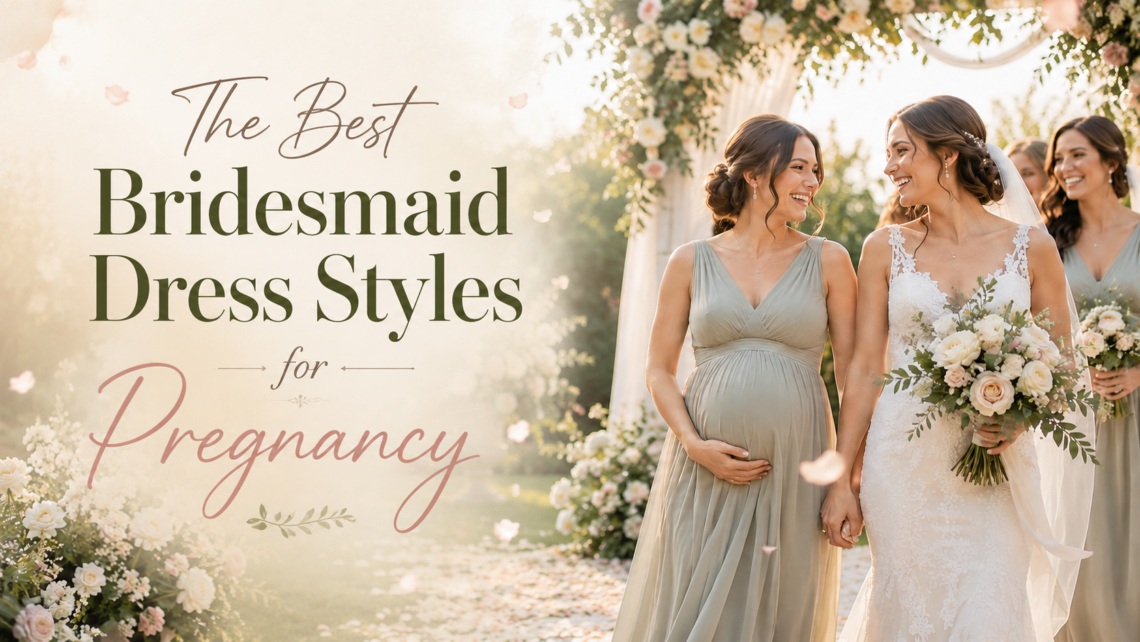
The Best Bridesmaid Dress Styles for Pregnancy
A handful of silhouettes consistently work well for pregnant bridesmaids, and they tend to look just as good on the rest of the bridal party — which makes color-matching and cohesion easier.
A-line. The most dependable silhouette for a pregnant bridesmaid, and the one you’ll see most often in maternity-specific bridesmaid collections for exactly this reason. With no defined waist seam, the dress adapts naturally as the bump grows, which matters if there’s a long stretch between the dress order and the wedding date. A-line works at floor length without losing its ease of movement, which is why it pairs so well with the next point.
Floor-length. Maternity bridesmaid dresses are almost always designed floor-length rather than midi or short. This isn’t a comfort compromise — a floor-length A-line skirt actually gives more room to move through the hips and belly than a shorter, more fitted hemline would, and it keeps the formality of the rest of the bridal party intact.
Sheath/column with stretch fabric. A more fitted option for bridesmaids who’d rather not disguise the bump. This works specifically when paired with a high-stretch fabric (see below) — without stretch, a column silhouette becomes uncomfortable quickly.
What to avoid: strapless styles with internal boning and any fitted mermaid or trumpet silhouette in a non-stretch fabric. A defined waistband sitting directly across the belly is also worth steering away from, regardless of silhouette.
Fabric Matters More Here Than Anywhere Else in the Wedding Party
For a pregnant bridesmaid, fabric does as much work as silhouette — arguably more. Three fabric categories show up consistently in maternity-friendly bridesmaid collections, each suited to a different point in pregnancy:
- Jersey (high-stretch). The most forgiving option for later pregnancy. It moves with the body through the belly and hips and doesn’t require sizing up as aggressively as a non-stretch fabric would.
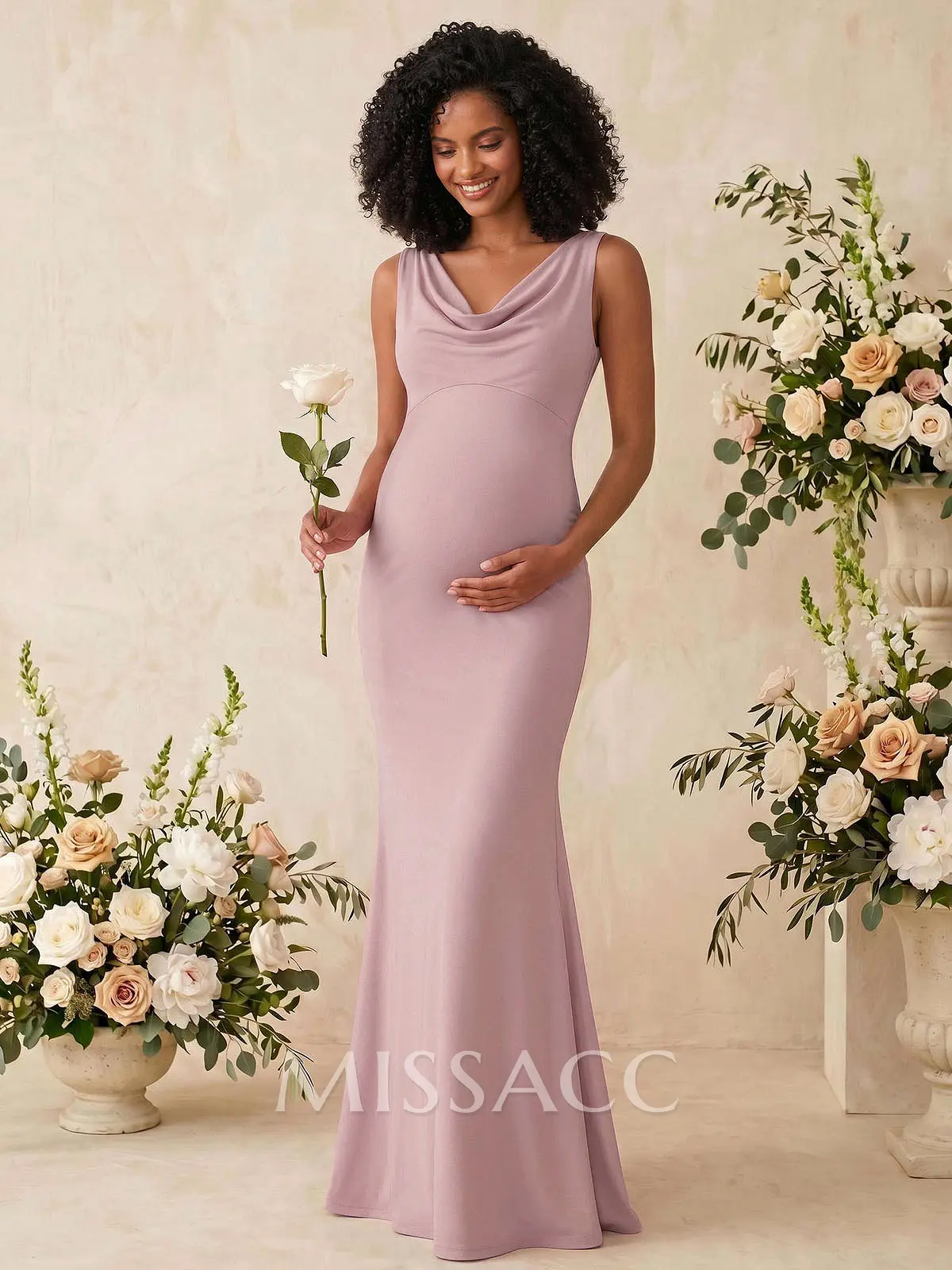
- Elastic satin (slight stretch). A middle-ground choice — it has enough give to be comfortable through most of pregnancy while still holding the structured, polished look of a traditional satin gown.
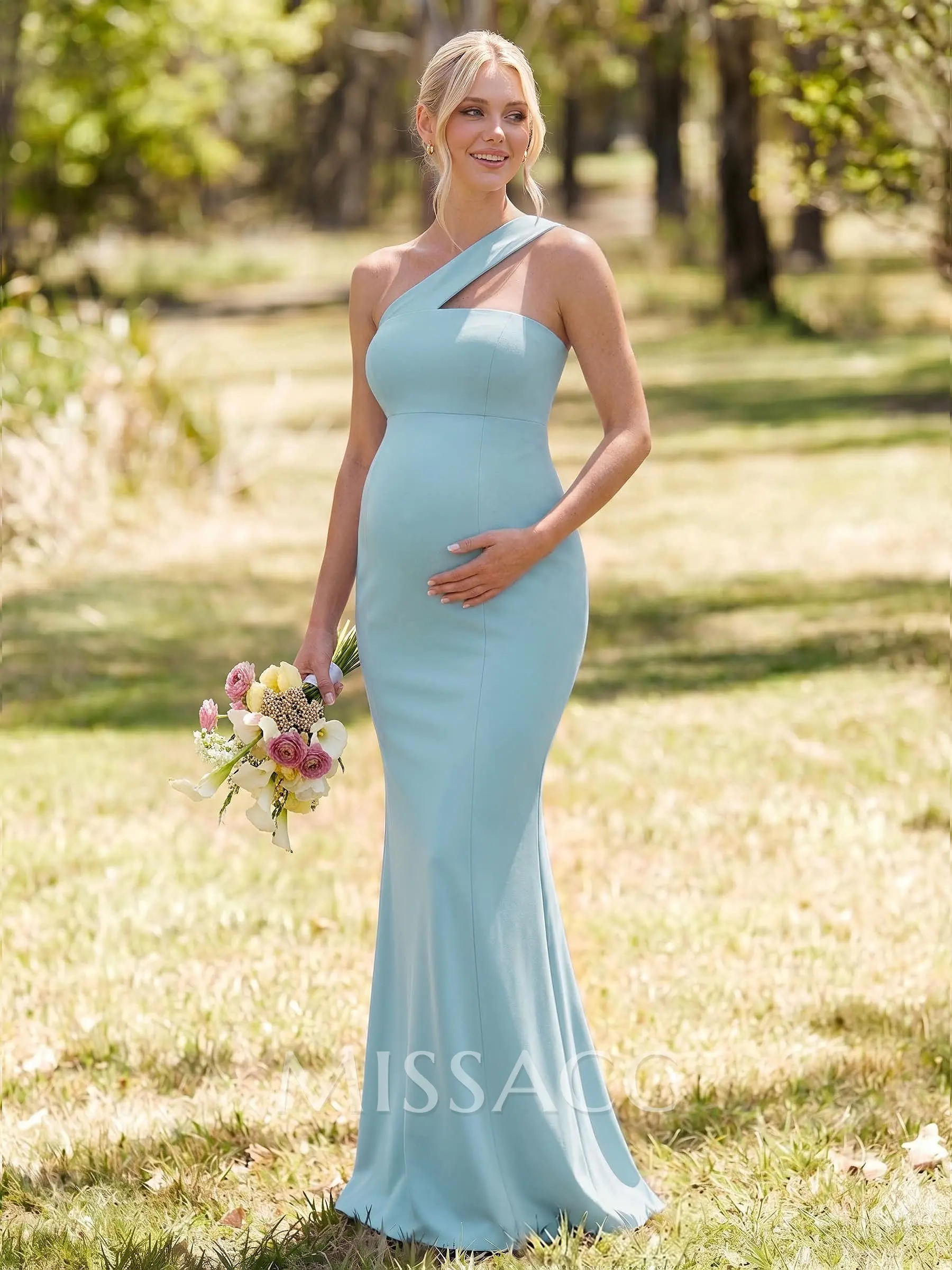
- Chiffon (non-stretch, but lightweight and flowing). Works well in A-line silhouettes specifically because the skirt doesn’t need to stretch — only drape. Pair chiffon with an A-line cut rather than anything fitted through the body.
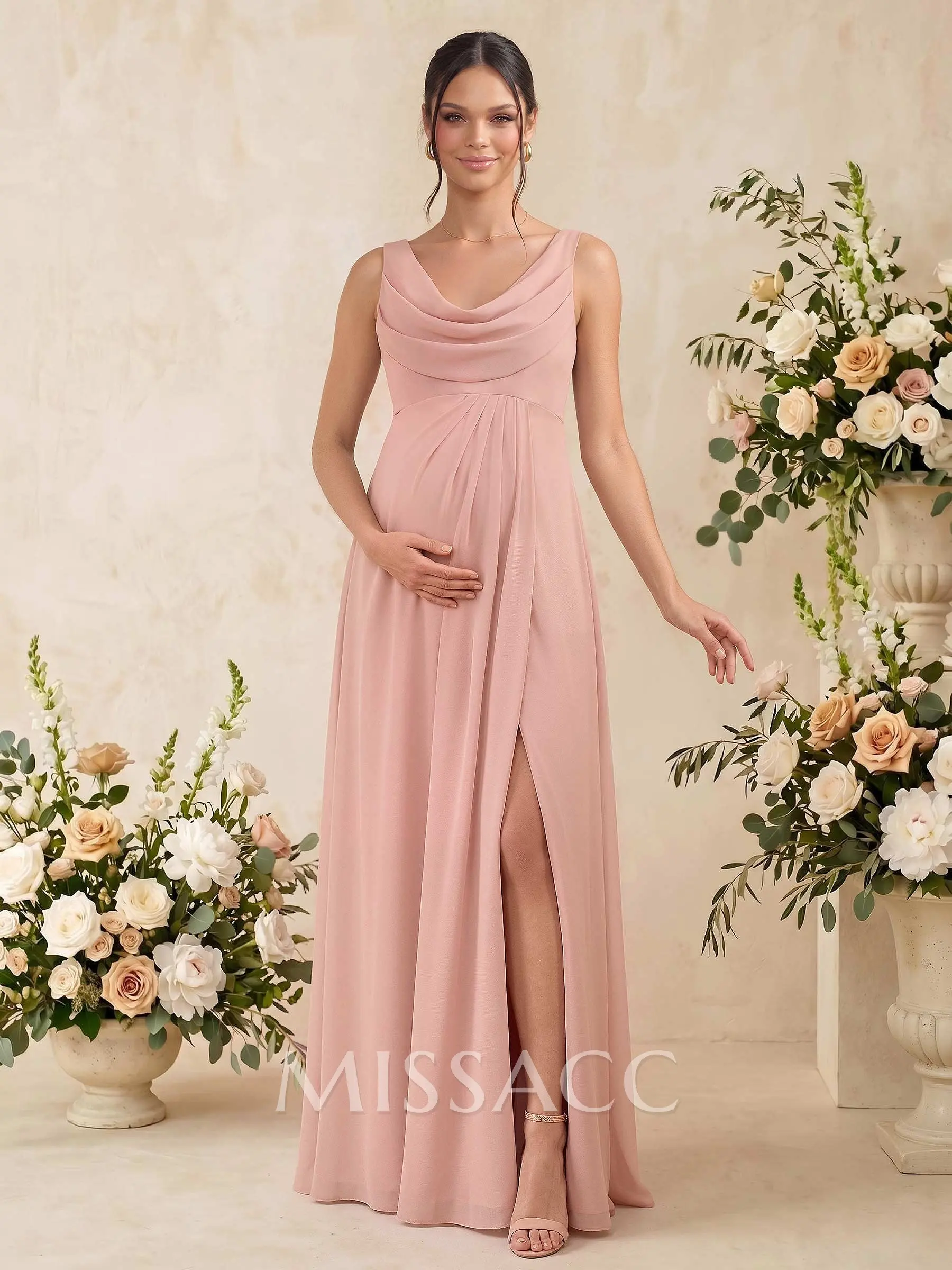
Avoid heavier structured fabrics with no stretch — particularly in column or fitted silhouettes — since they tend to feel restrictive sooner than expected, even when the style itself looks unstructured.
If the rest of the bridal party is in a non-stretch satin or chiffon, ask whether the same color is available in elastic satin or jersey rather than asking the pregnant bridesmaid to wear the less comfortable option for the sake of uniformity.
How to Size a Bridesmaid Dress During Pregnancy
This is where most of the actual planning difficulty lives — bodies change quickly during pregnancy, and standard sizing charts don’t account for that.
General sizing guidance:
- For dresses ordered during the first or second trimester, sizing one size up from her usual size is typically enough cushion for A-line styles, especially in elastic satin or jersey.
- For dresses ordered later, or for a wedding falling in the third trimester, sizing up two sizes — or choosing the high-stretch jersey fabric option where available — gives more reliable room.
- Measure bust, under-bust, and belly closer to the wedding date rather than relying on pre-pregnancy measurements. A measurement taken 6–8 weeks out is far more accurate than one taken at the time of booking.
- When in doubt between two sizes, choose the larger one. A dress with room to spare is easy to take in with simple alterations closer to the date; a dress that’s tight by the wedding is a much harder problem to solve.
A-line styles in elastic satin or jersey are the most forgiving of small sizing misses, since the skirt doesn’t rely on a fitted waist measurement to look intentional.
When to Order a Maternity-Friendly Bridesmaid Dress
Timing is the single biggest factor in getting this right, more so than style or color.
- Order 2–3 months ahead of the wedding if possible. This builds in time for delivery, a first fitting, and any final adjustments closer to the date.
- Plan for at least two fittings rather than one — an early fitting to confirm the general fit, and a final one within 1–2 weeks of the wedding to catch late changes.
- If the wedding falls in the third trimester, lean toward the highest-stretch fabric option available (jersey) over a non-stretch fabric that requires precise tailoring, since last-minute alterations become harder to schedule the closer you get to the due date.
If the pregnant bridesmaid is due very close to the wedding date, it’s worth having a brief, low-pressure conversation about a backup plan — not because it will likely be needed, but because it removes one source of stress for everyone involved.
Color and Coordination Notes
Solid colors tend to photograph more cohesively across a bridal party that includes one or more pregnant bridesmaids, since they create a clean line regardless of where each person is in pregnancy. If the wedding palette includes a print, a solid-color option in the same family is usually available and keeps the overall lineup looking intentional rather than inconsistent.
2026’s bridesmaid palettes are leaning toward grounded, sophisticated tones — sage, terracotta, dusty blue, and champagne all work well for maternity-friendly silhouettes and photograph consistently well across a range of skin tones and lighting conditions.
Frequently Asked Questions
A-line is generally the most dependable choice, particularly in a floor-length cut. With no defined waist seam, the dress stays comfortable and well-fitted at almost any stage of pregnancy. Pairing A-line with a stretch fabric like jersey or elastic satin makes it even more adaptable as the bump grows.
In most cases, the same color works for everyone — the key is choosing a maternity-friendly silhouette (A-line) in a stretch fabric (jersey or elastic satin) rather than sourcing a different dress entirely. This keeps the bridal party looking cohesive.
As a general guide, one size up is usually sufficient for orders placed in the first or second trimester, especially in elastic satin or jersey. For later pregnancies or third-trimester weddings, two sizes up — or the highest-stretch fabric option available — gives more reliable room.
Order 2–3 months before the wedding when possible, and plan for at least two fittings: an early one to check general fit, and a final one close to the wedding date.
Jersey (high-stretch) is the most comfortable option for later pregnancy, since it moves with the body. Elastic satin offers a structured look with some give, and chiffon works well specifically in A-line cuts where the skirt only needs to drape rather than stretch.
Often yes, if an A-line option is available in the wedding’s chosen color. If the rest of the party is wearing a non-stretch fabric, choosing the same color in elastic satin or jersey keeps the look cohesive while staying comfortable.
The Short Version
A maternity-friendly bridesmaid dress doesn’t need to be a separate category of shopping. The combination that consistently works is an A-line, floor-length silhouette in a stretch-friendly fabric — jersey for the most give, elastic satin for a more structured look, or chiffon if the cut itself doesn’t require stretch — ordered with extra sizing room and enough lead time for a final fitting close to the wedding date. Get those three things right, and the rest of the styling — color, neckline, accessories — falls into place easily.
Missacc’s pregnant bridesmaid dress includes A-line styles in jersey, elastic satin, and chiffon, available with custom sizing so the dress can be ordered to fit comfortably at whatever stage of pregnancy the wedding date falls on.