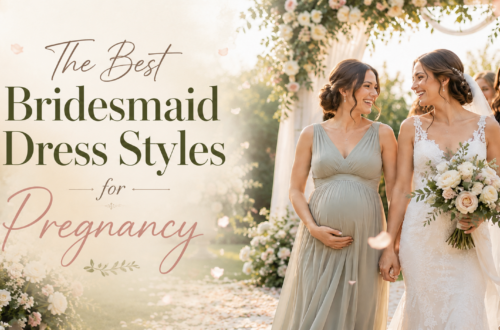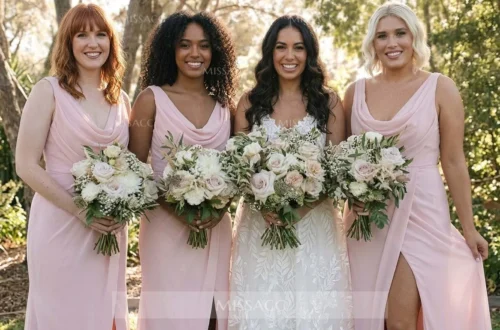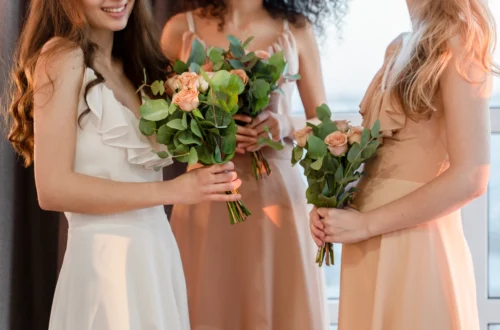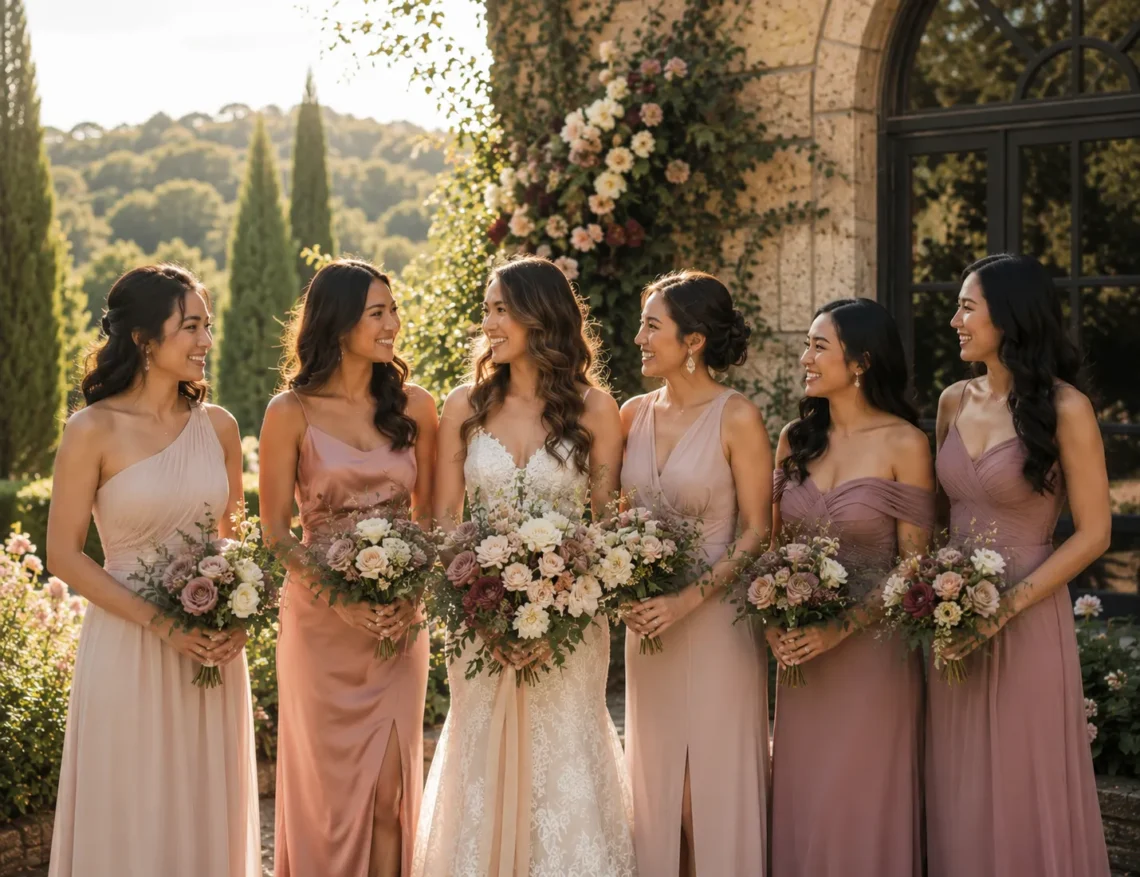
The era of identical bridesmaid dresses is over. More and more brides in 2026 are embracing the mix-and-match approach — letting each bridesmaid wear a silhouette that suits her body, her comfort, and her personality, while still keeping the overall look intentional and cohesive.
But “mix and match” done wrong can look chaotic. Done right, it looks like the most thoughtfully styled wedding in the room.
This guide walks you through everything you need: the rules for color, silhouette, and fabric — plus a communication template you can send directly to your bridesmaids so no one shows up in the wrong shade of blush.
Why Mix-and-Match Works (When It Works)
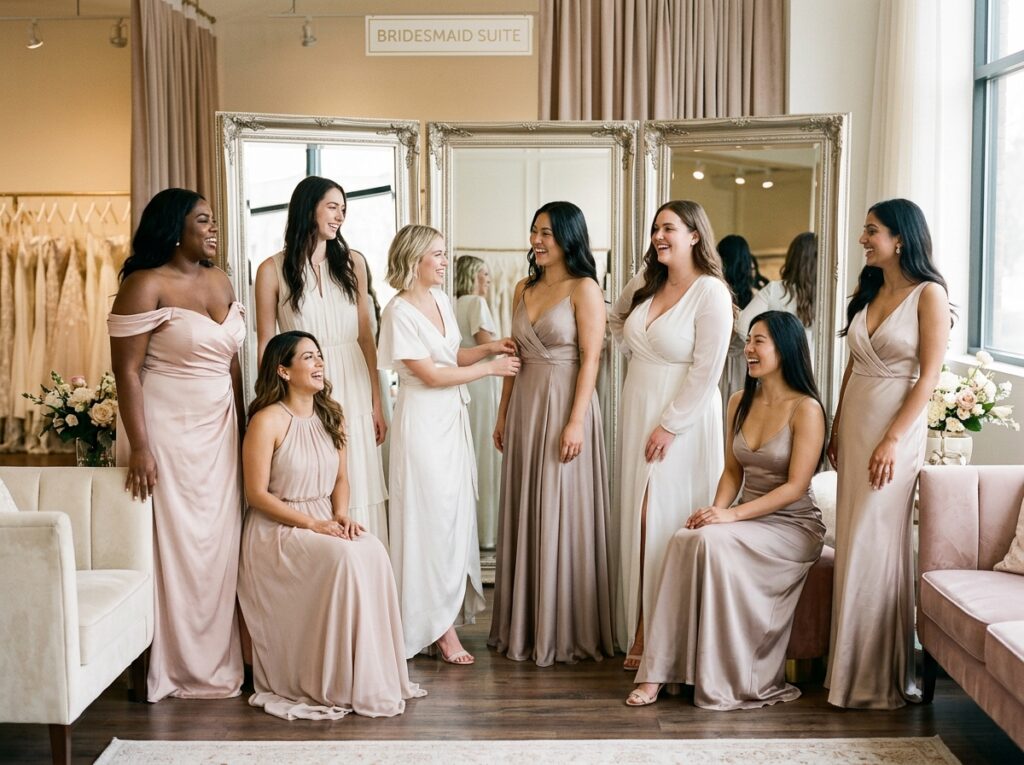
The logic is simple: not every dress flatters every body, and not every bridesmaid has the same budget, comfort level, or personal style. A strapless gown that looks stunning on one person can be a source of anxiety for another. A slinky satin column might be the dream of one bridesmaid and a nightmare for the next.
Mix-and-match solves this. Instead of choosing one dress for five different people and hoping it lands, you choose a framework — a color, a fabric family, or a set of silhouette guidelines — and let each bridesmaid find her best version within that framework.
The result is a bridal party that looks like they belong together, not like they came off the same assembly line.
PART 1: THE COLOR RULE
Color is the fastest way to create visual unity across different silhouettes and fabrics. When every dress reads as part of the same palette, differences in cut and style become intentional variety rather than inconsistency.
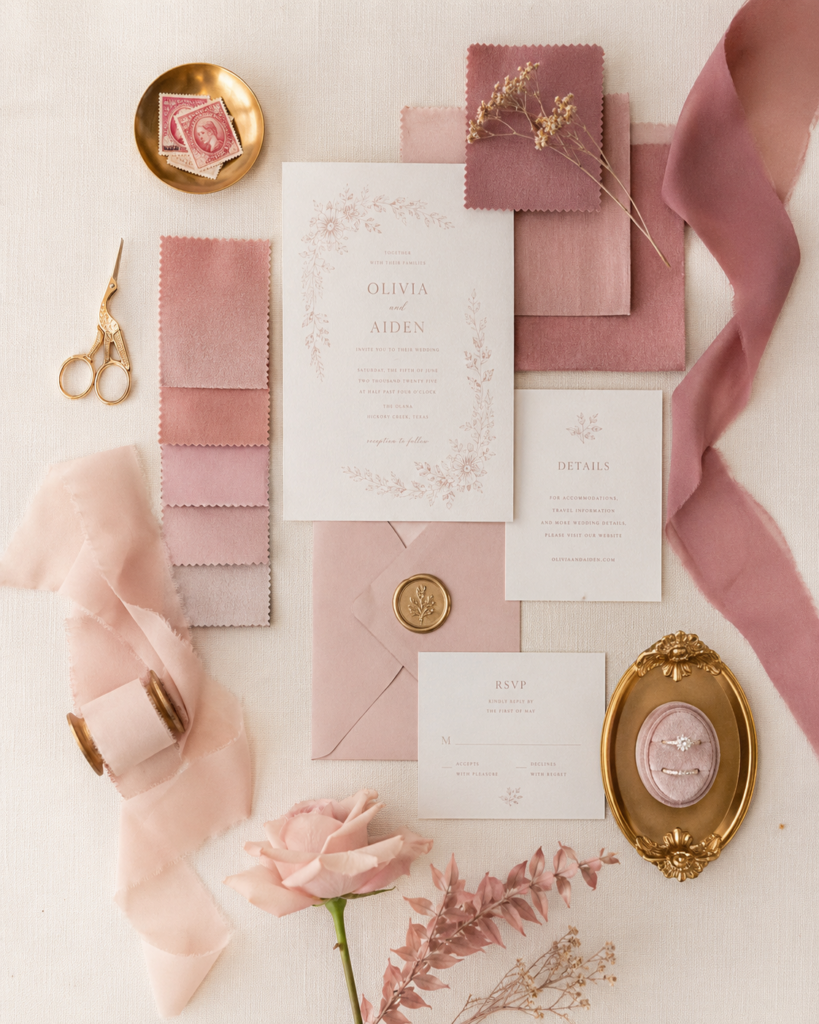
Here are three approaches, from simplest to most creative:
Method 1: One Color, Different Depths
Choose a single color and allow bridesmaids to select light, medium, or deep shades within that family.
Example: Dusty rose / blush / deep mauve — all pink-based, all harmonious
Example: Sage / eucalyptus / forest green — a full tonal green story
Example: Champagne / gold / bronze — a warm metallic palette that photographs beautifully
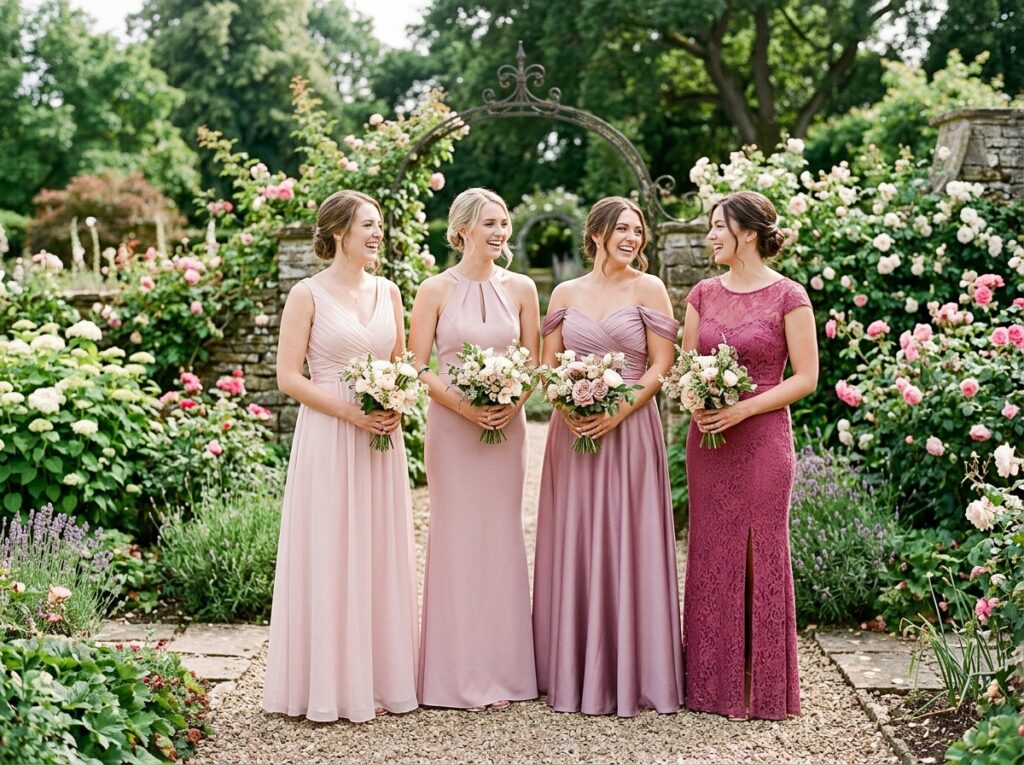
This is the most beginner-friendly approach. It is forgiving, it photographs well in natural light, and it gives bridesmaids enough freedom to find a shade that works for their skin tone.
If you are leaning toward green, our guide to sage green bridesmaid dresses walks through every shade from pale eucalyptus to deep forest, including which tones photograph best in different lighting conditions.
Method 2: Complementary Colors
Choose two colors that sit across from each other on the color wheel or that naturally balance each other.
Example: Dusty blue + terracotta (a 2026 favorite for outdoor weddings)
Example: Sage green + champagne (earthy meets warm neutral)
Example: Burgundy + dusty pink (rich meets soft)
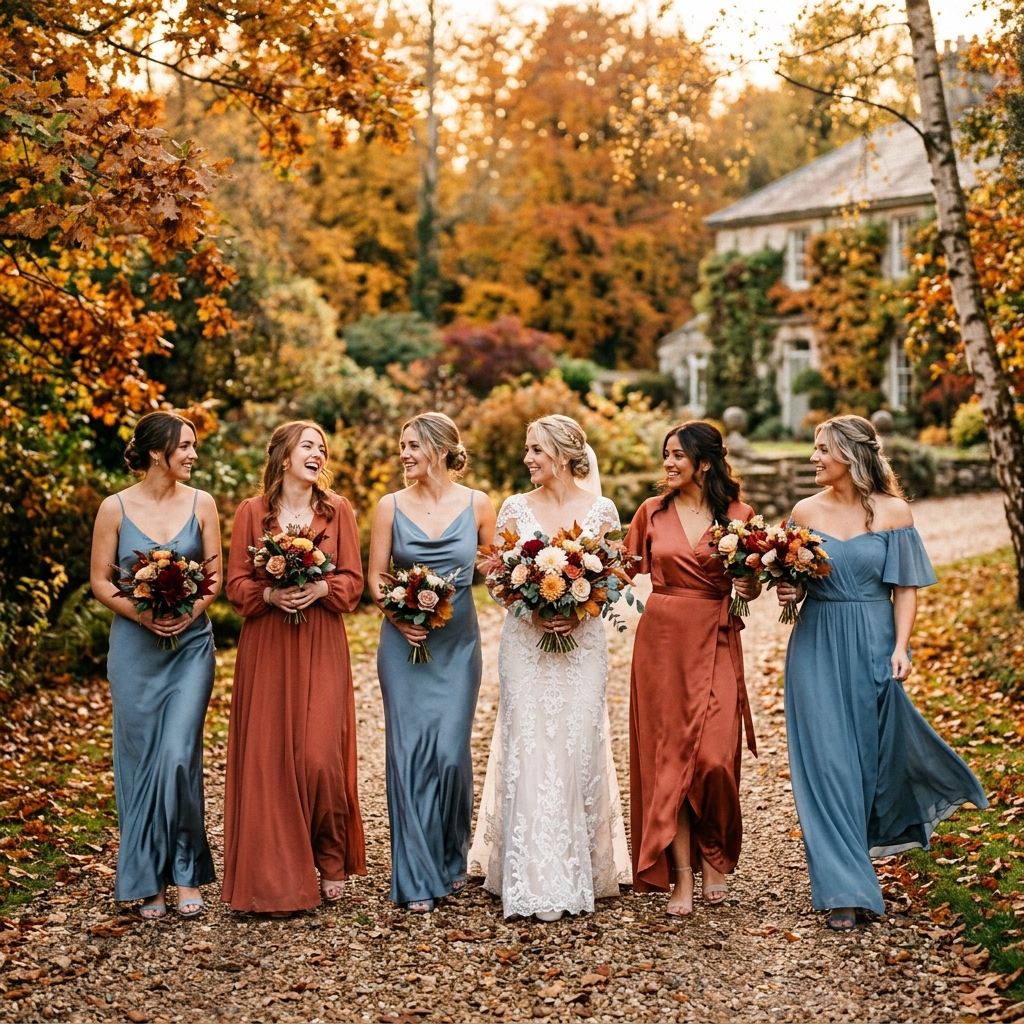
The key is proportion: typically, two-thirds of the bridal party wears the anchor color and one-third wears the accent. This prevents the palette from looking split down the middle.
Burnt orange and terracotta have become one of the most searched complementary combinations this year. If warm earthy tones appeal to you, our burnt orange bridesmaid dress guide covers exactly how to pair this color with neutrals, which skin tones it flatters most, and what to avoid.
Method 3: Neutral + One Statement
All bridesmaids wear a neutral (champagne, ivory, dusty gray, or white) except for one or two who wear the wedding’s accent color. This works particularly well for the maid of honor, who can be visually distinguished from the group through color alone.
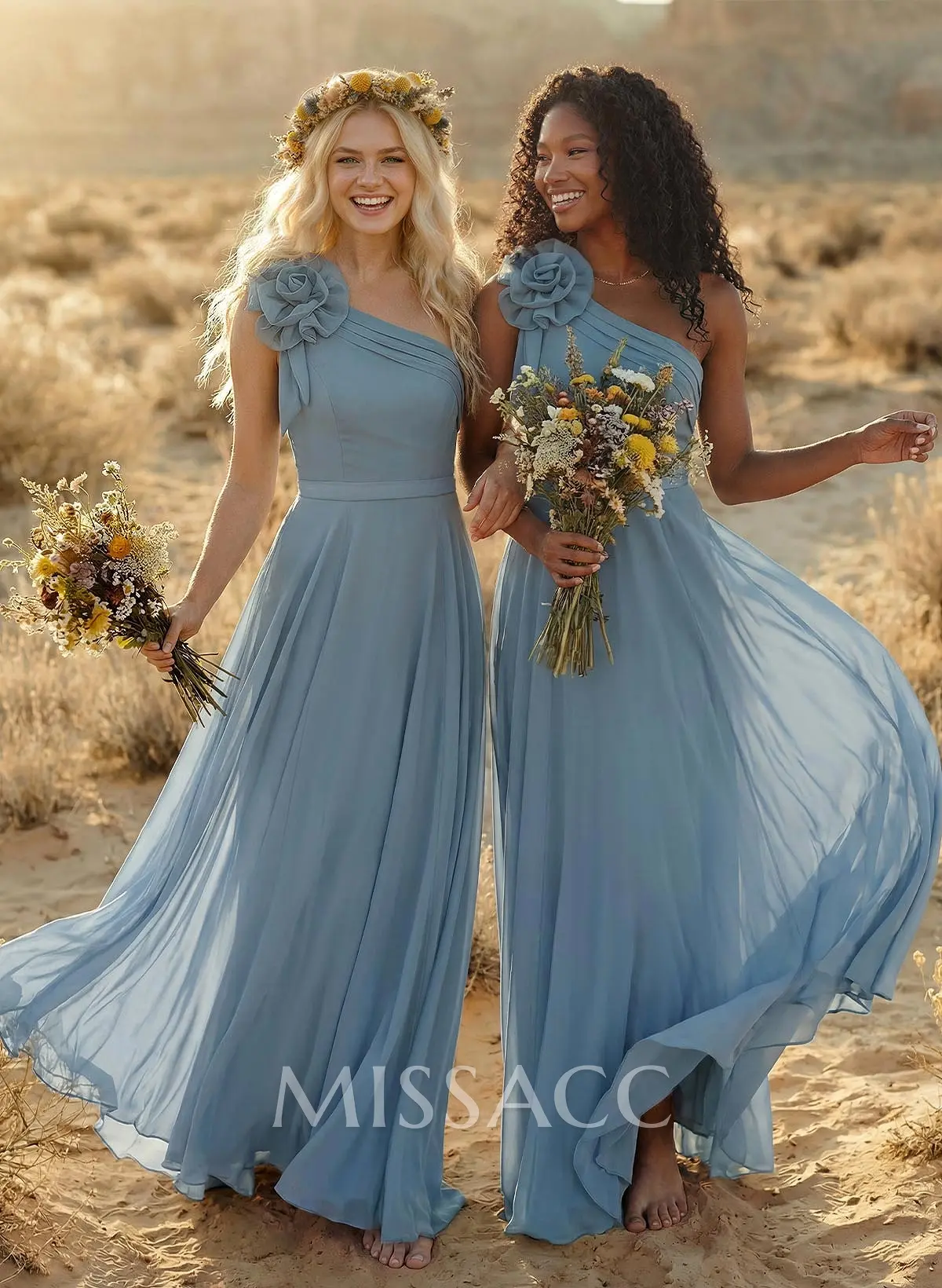
Missacc offers over 70 colors across its bridesmaid collection — from classic champagne and dusty blue to trending mocha, terracotta, and midnight plum — making it easy to build a coherent palette without ordering from multiple brands.
2026 Color Palettes We Love Right Now
If you are looking for starting points, these four palettes are trending this year and photograph especially well across different seasons:
Garden Romance: Dusty rose + blush + ivory
Earthy Elegance: Terracotta + champagne + sage
Moody Luxury: Burgundy + deep plum + dusty mauve
Coastal Calm: Dusty blue + slate + soft white
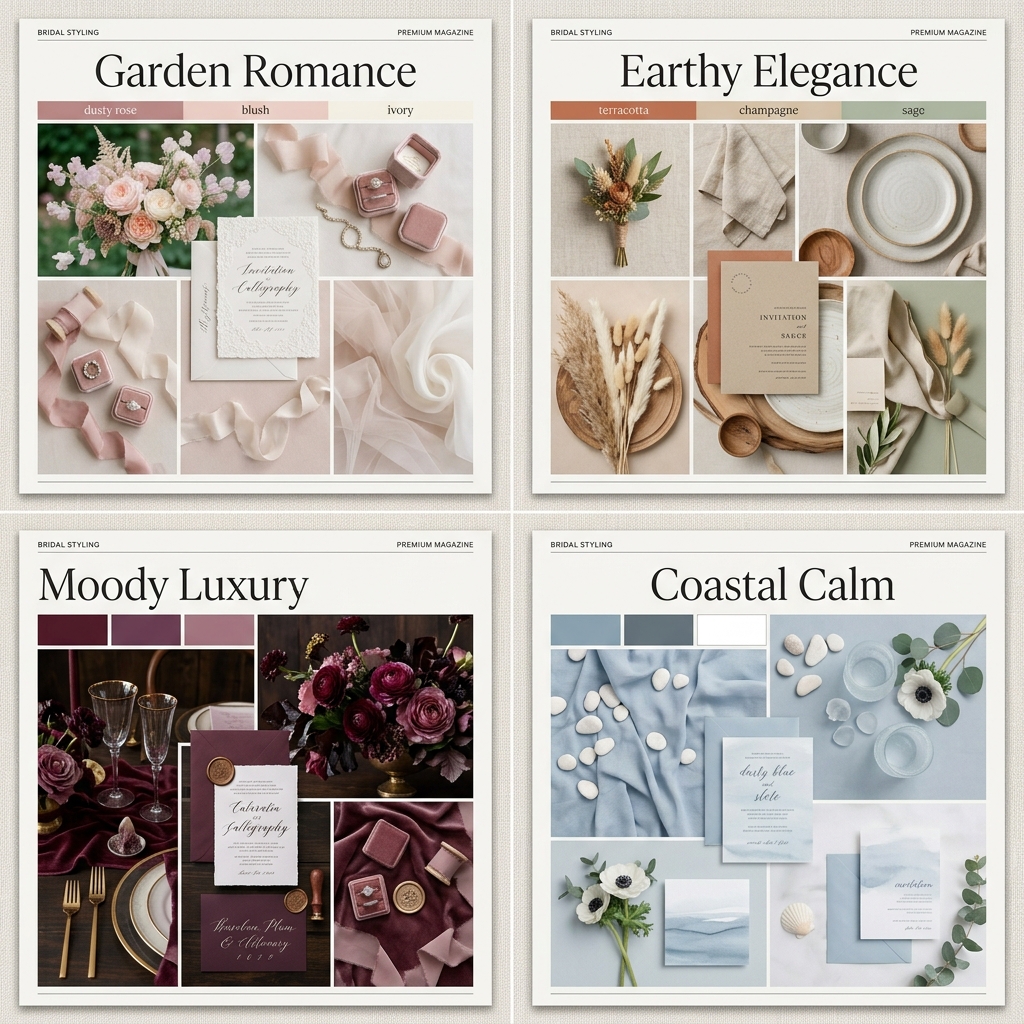
Planning a fall or winter wedding? Burgundy, navy, and emerald are the three colors dominating autumn bridal parties right now — and they work exceptionally well in a mix-and-match format. See our fall bridesmaid color guide for palette combinations, accessory pairings, and bouquet advice that ties each color together.
Each of these palettes works with both satin and chiffon, which brings us to the next rule.
PART 2: THE FABRIC RULE
Mixing fabrics is where things get interesting — and where most brides get nervous. The secret is that fabric mixing works when the fabrics have a shared quality: all soft and drapey, or all structured and architectural.
Satin and chiffon are the two most popular bridesmaid fabrics for a reason: they complement each other naturally. Satin reads as polished and sculptural; chiffon reads as romantic and light. Together in the same color, they create visual depth without visual conflict.
Missacc’s bridesmaid collection includes:
Soft Satin — structured with a smooth, reflective finish; ideal for sleek silhouettes
Matte Satin — the same structure with a more understated, editorial finish
Acetate Satin — a slightly lighter satin with excellent drape
Crepe Chiffon — lightweight with beautiful movement; ideal for outdoor ceremonies
Velvet — rich texture for fall and winter weddings
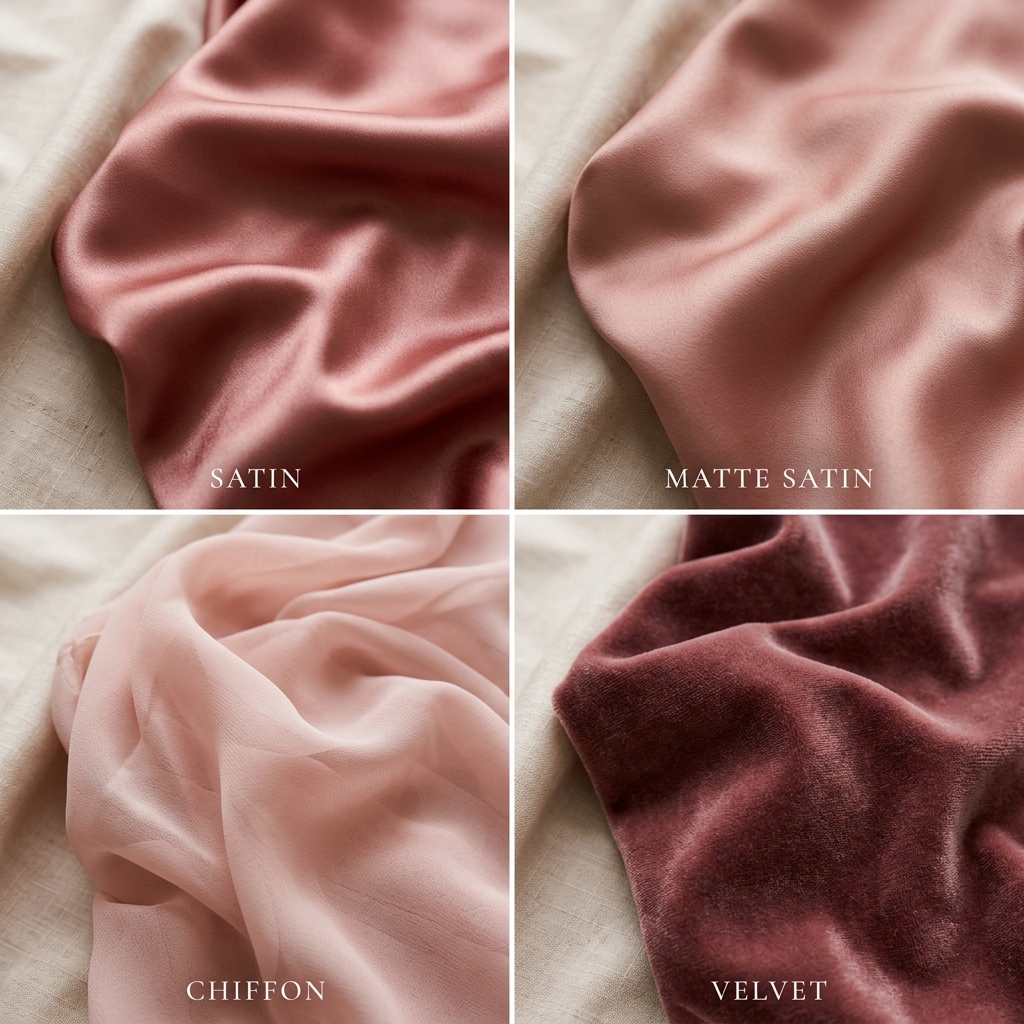
Velvet in particular is making a strong comeback for 2026 wedding season. If you are considering a deep-tone palette — emerald, burgundy, or midnight blue — our emerald green formal wear guide covers how to mix velvet and chiffon in the same color story, including which silhouettes work best when the two fabrics sit side by side in a bridal party photo.
Fabric Mixing Rules:
Keep all drapey fabrics together (chiffon, crepe, soft organza) or all structured fabrics together (satin, matte satin, velvet). Mixing a structured satin gown with a flowing chiffon gown works because both can exist in the same color story, but mixing velvet with chiffon in the same palette can feel inconsistent unless the silhouettes are very deliberately chosen.
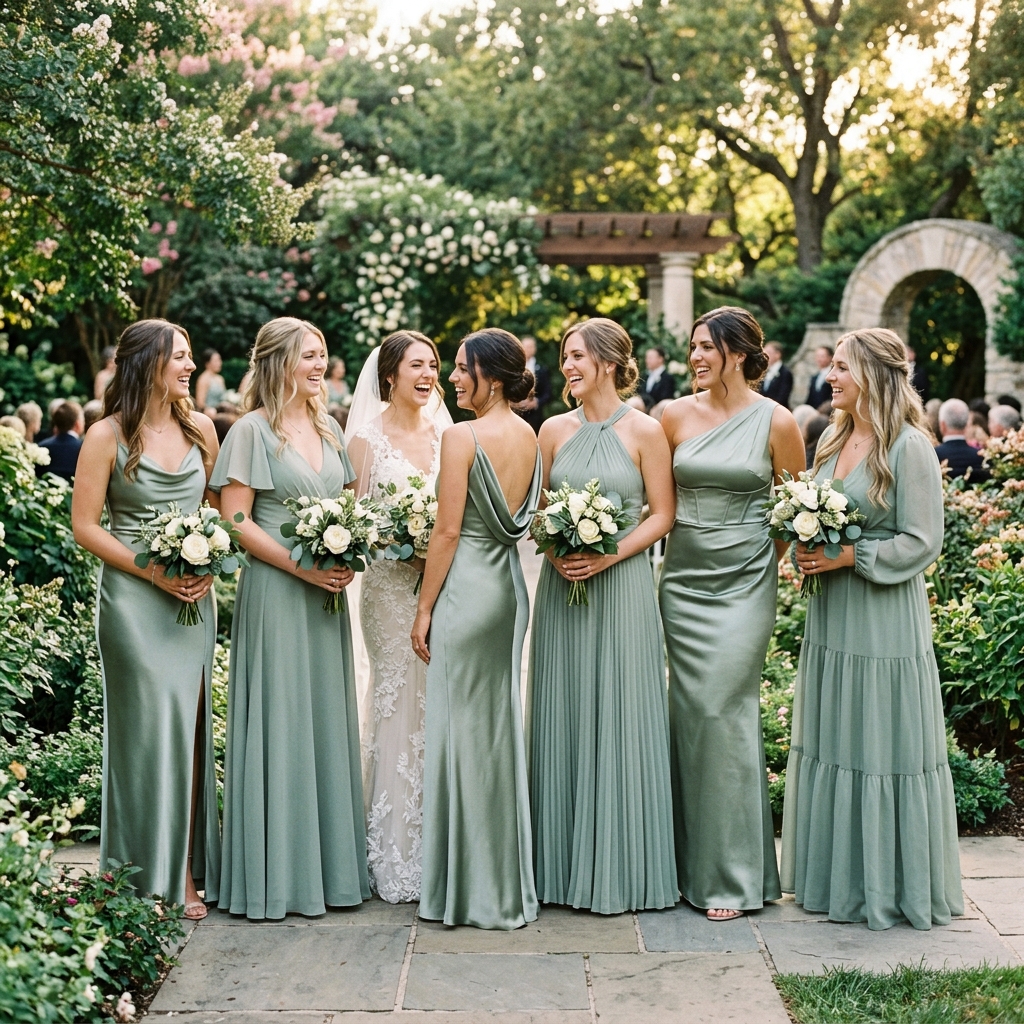
If in doubt: same fabric, different silhouettes. This is the safest and most elegant approach.
PART 3: THE SILHOUETTE RULE
Silhouette is where bridesmaids have the most freedom — and where brides often feel most uncertain. Here is a simple framework:
A-line: The universal silhouette. It works on nearly every body type, photographs from every angle, and pairs with both satin and chiffon. If you are allowing free silhouette choice, an A-line is a reliable anchor for the group.
Column / Sheath: Sleek and minimal. Best for bridesmaids who prefer a streamlined look. Pairs beautifully with cowl necklines and slinky satin.
One-Shoulder: Adds asymmetric drama without being overpowering. Great as a contrast silhouette for one or two bridesmaids in a predominantly simple group.
Off-Shoulder / Sweetheart Strapless: Romantic and classic. Works well as the “anchor” style that several bridesmaids share, with others choosing more individual necklines.
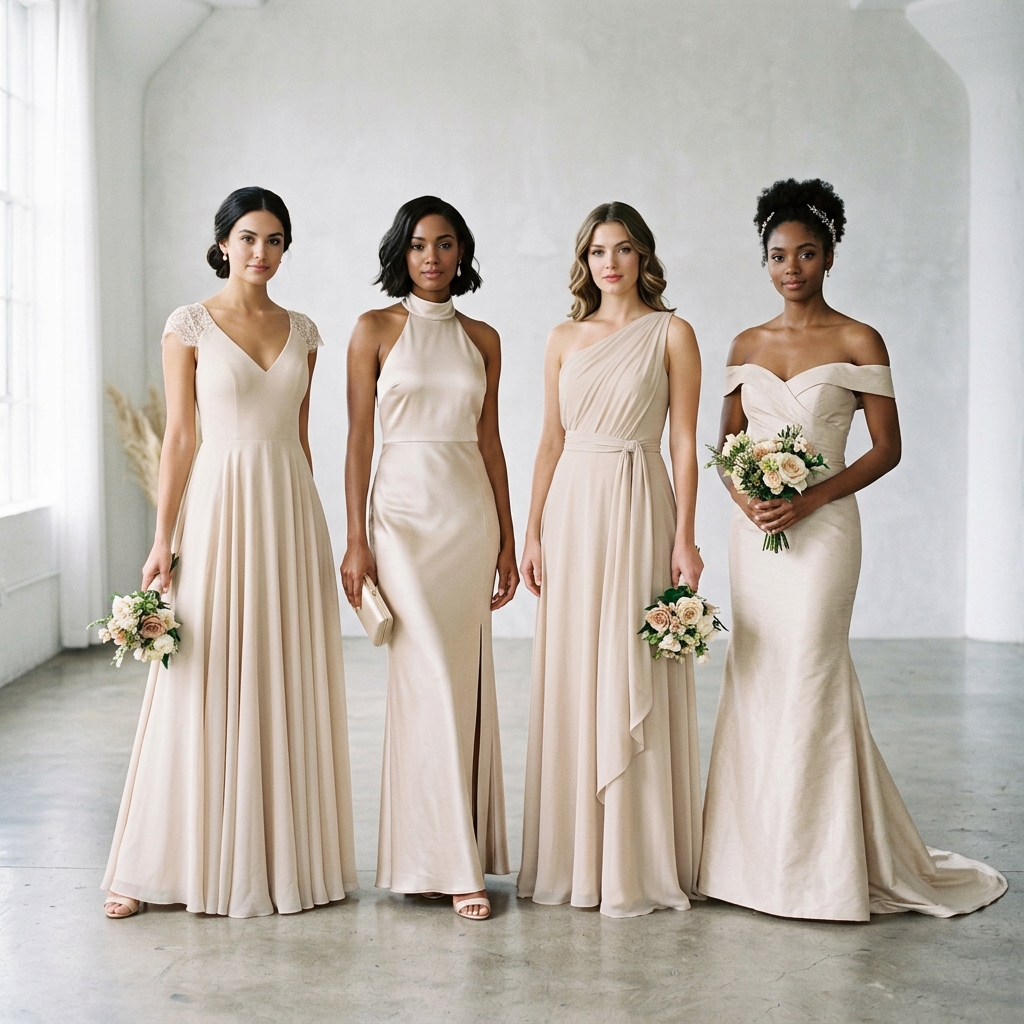
Seeing how different silhouettes actually look on real people is the fastest way to narrow your options. Our bridesmaid dress review series with real customer photos shows A-line, column, mermaid, and one-shoulder styles worn by actual Missacc customers — with sizing notes and honest fit feedback for each one.
Balancing the Group: If you are mixing silhouettes, a useful visual rule is to have one or two “statement” silhouettes (one-shoulder, asymmetric, a dramatic neckline) and the rest in a simpler shared style. This creates visual interest without looking uncoordinated.
PART 4: HOW TO COMMUNICATE THE PLAN TO YOUR BRIDESMAIDS
The most common mix-and-match mistake is not a color mistake or a fabric mistake. It is a communication mistake.
Here is a template you can copy and send directly to your group chat:
Hi everyone! I wanted to share the bridesmaid dress guidelines, so you have everything you need.
Color: We are working within [your color/palette]. I have linked the brand and color options below.
Silhouette: You can choose [any silhouette / A-line or column / any style within the guidelines below].
Fabric: Please choose from [satin/chiffon / either].
Length: [Floor length/midi / your choice].
Let me know if you have questions — I am happy to help!

The more specific your brief, the fewer decisions your bridesmaids have to make and the fewer misunderstandings you will deal with later. A good brief feels like freedom within a frame, not a free-for-all.
HOW MISSACC MAKES MIX-AND-MATCH EASY
Mix-and-match only works when everyone can find their best silhouette in the same color and fabric. That is where Missacc’s model is particularly useful.
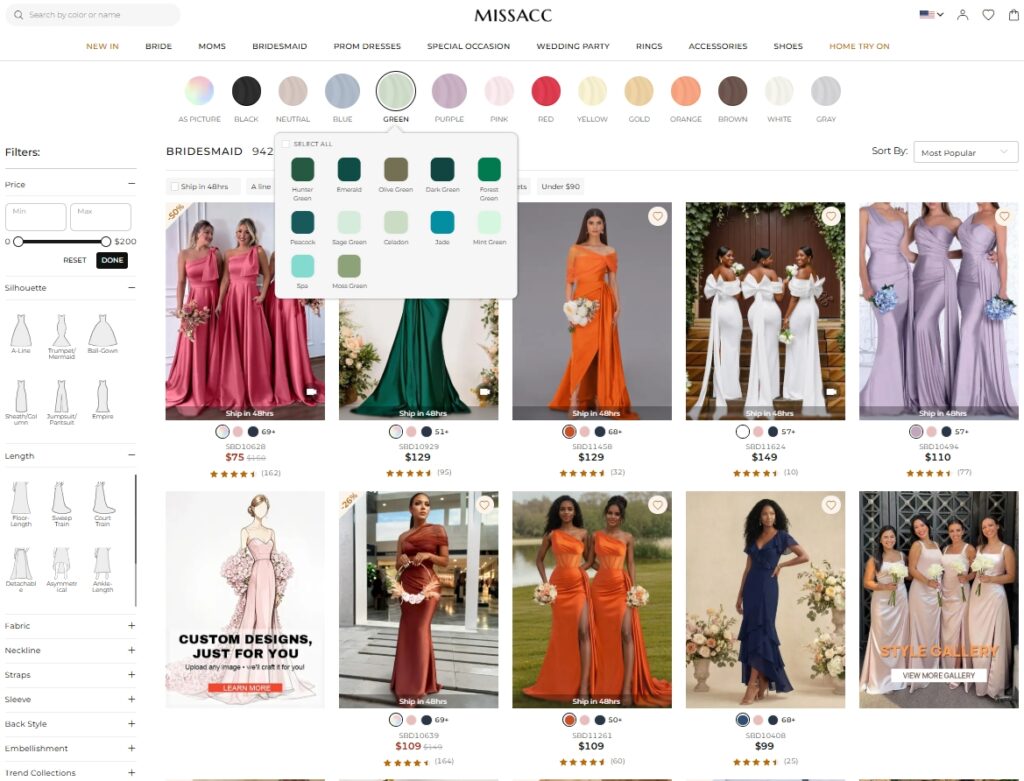
Every Missacc bridesmaid dress is made to order — which means each bridesmaid can choose her own size, including free custom measurements, without affecting what anyone else orders. There is no bulk order minimum, no shared size chart compromise, and no choosing between the dress that fits and the dress that looks good.
With 900+ styles in 70+ colors across satin, chiffon, velvet, and more, each bridesmaid can browse the full collection filtered to the agreed color and fabric, and select the silhouette that works for her.
Budget is often the quiet tension in bridesmaid dress conversations. If keeping costs manageable is a priority, our roundup of the best Missacc bridesmaid dresses under $100 shows that mix-and-match and affordability are not mutually exclusive — every style featured is under $100, available in 20+ colors, and made to custom measurements at no extra cost.
Starting from $66, the price point also removes the budget anxiety that often comes with bridesmaid dress shopping.
Browse the full bridesmaid collection at missacc.com/category-bridesmaid-dresses
QUICK REFERENCE: THE MIX-AND-MATCH DECISION TREE
Step 1 — Choose your color approach:
One color, tonal variations / Two complementary colors / Neutral base + one accent
Step 2 — Choose your fabric approach:
Same fabric throughout / Satin + chiffon mix / Seasonal fabric (velvet for fall/winter)
Step 3 — Choose your silhouette approach:
Free choice / Guided choice (any from a short list) / One shared style with one or two individual exceptions
Step 4 — Set a clear deadline and send a written brief to your bridesmaids.
Step 5 — Shop in one place so colors are truly consistent. Missacc’s collection spans all major silhouettes and fabrics within the same verified color library.
FINAL THOUGHT
Mix-and-match works because it asks a better question than “which dress should everyone wear?” It asks: “What framework will make every person in this bridal party feel their best?”
The answer to that question — a clear color, a shared fabric story, and the freedom to choose a silhouette that fits — is exactly what makes a bridal party look elevated rather than uniform.
When each bridesmaid feels genuinely good in what she is wearing, it shows in the photographs, in the ceremony, and in the way the whole day feels.
That is what the best mix-and-match approach delivers. And with the right collection behind it, it is a lot more achievable than it sounds.
Shop the full Missacc bridesmaid collection: https://www.missacc.com/category-bridesmaid-dresses