The most important bridesmaid dress styles to avoid are those that disregard the wedding’s formality, clash with the overall theme, or fail to flatter your bridesmaids’ diverse body types. Choosing the right dresses is about creating a cohesive look that complements your wedding aesthetic while ensuring your closest friends feel comfortable and confident standing by your side. This guide helps you navigate common pitfalls and select styles that enhance your special day.
Understanding how different dress styles function in a real-world wedding setting is key. A dress that looks beautiful online might not work with your venue’s backdrop or the season’s weather. By focusing on harmony, comfort, and flattering silhouettes, you can assemble a bridal party look that is both stunning and practical.
1. Ignoring the Formality and Theme of Your Wedding
One of the most common mistakes is selecting bridesmaid dresses without considering the bigger picture. The dresses should feel like a natural extension of your wedding’s atmosphere, not a completely separate element.
Mismatching the Dress Code
A black-tie wedding requires a certain level of sophistication that a short, cotton sundress simply cannot meet. Conversely, a heavily beaded, floor-length gown will feel out of place at a casual beachfront ceremony.
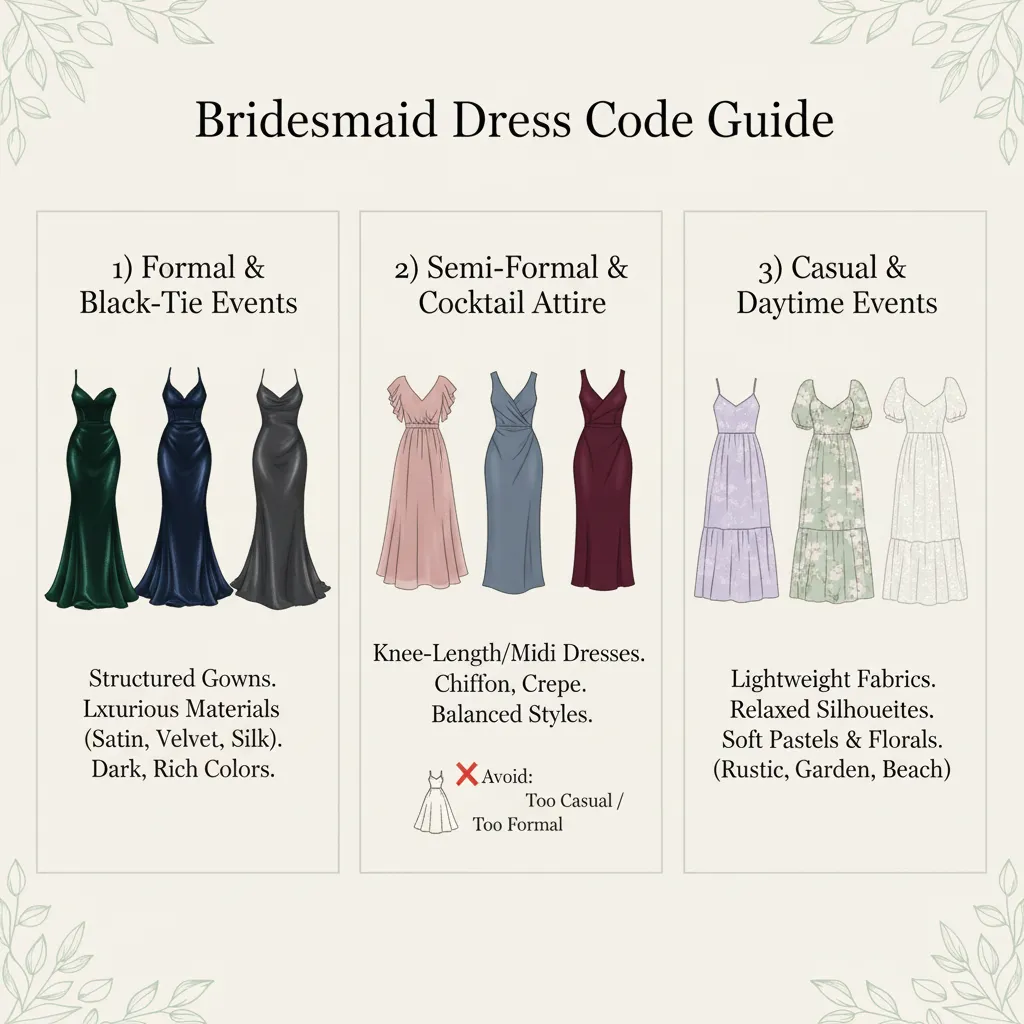
- Formal & Black-Tie Events: Avoid casual fabrics like linen or jersey. Instead, look for structured gowns in luxurious materials such as satin, mikado, or velvet. Full-length dresses are standard, and darker, richer colors often signal formality.
- Semi-Formal & Cocktail Attire: This is a flexible dress code, but it’s best to avoid overly casual or extremely formal options. Knee-length or midi dresses in fabrics like chiffon or crepe work beautifully. Steer clear of styles that are too revealing or too simple.
- Casual & Daytime Events: For rustic, garden, or beach weddings, avoid stiff, heavy fabrics. Styles that feel too restrictive, like a boned corset bodice, can look and feel uncomfortable. Lightweight, breathable fabrics and more relaxed silhouettes are ideal.
👉A-line bridesmaid dresses in flowing chiffon are versatile for most semi-formal weddings, offering elegance without feeling overly restrictive.
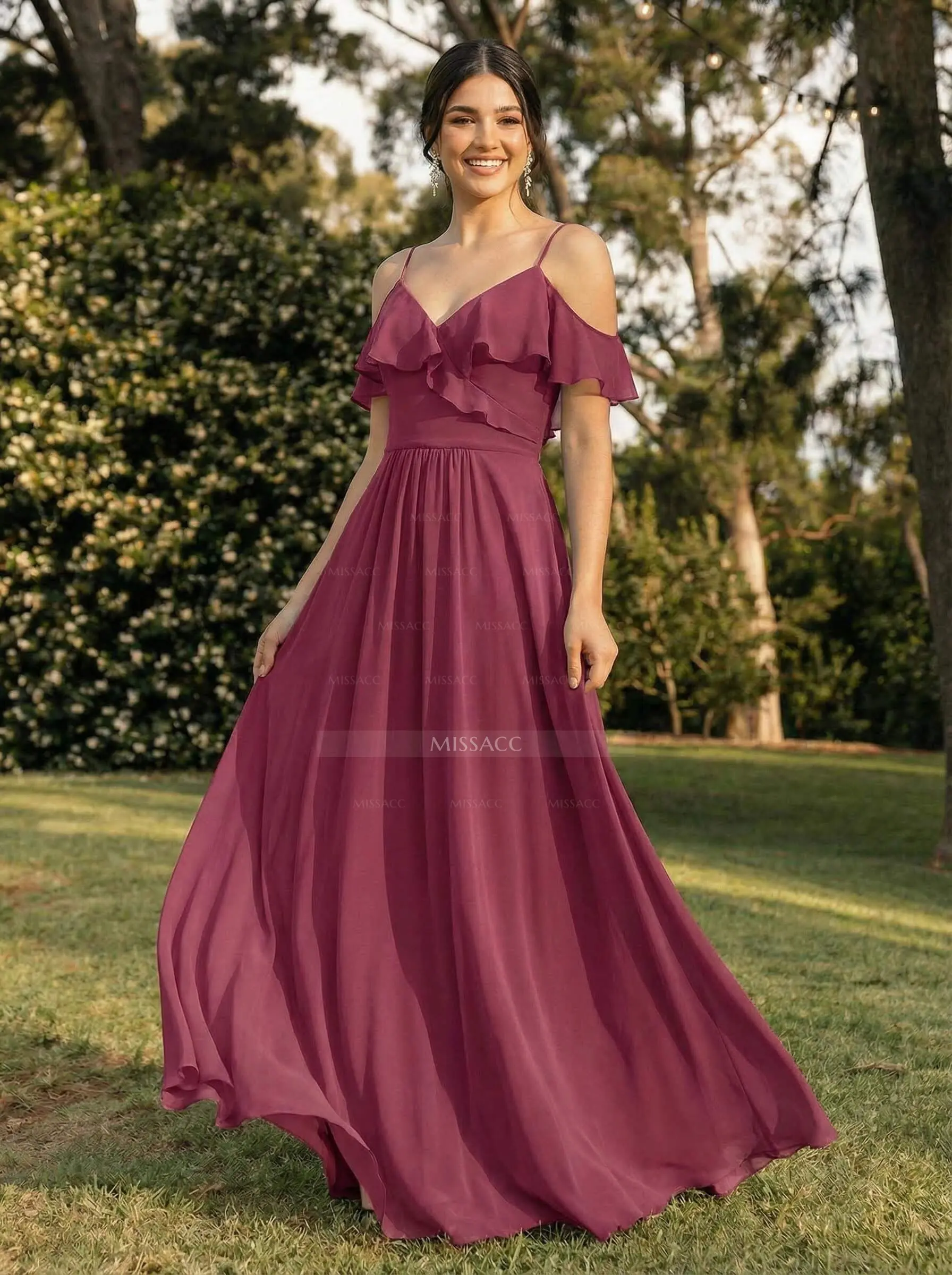
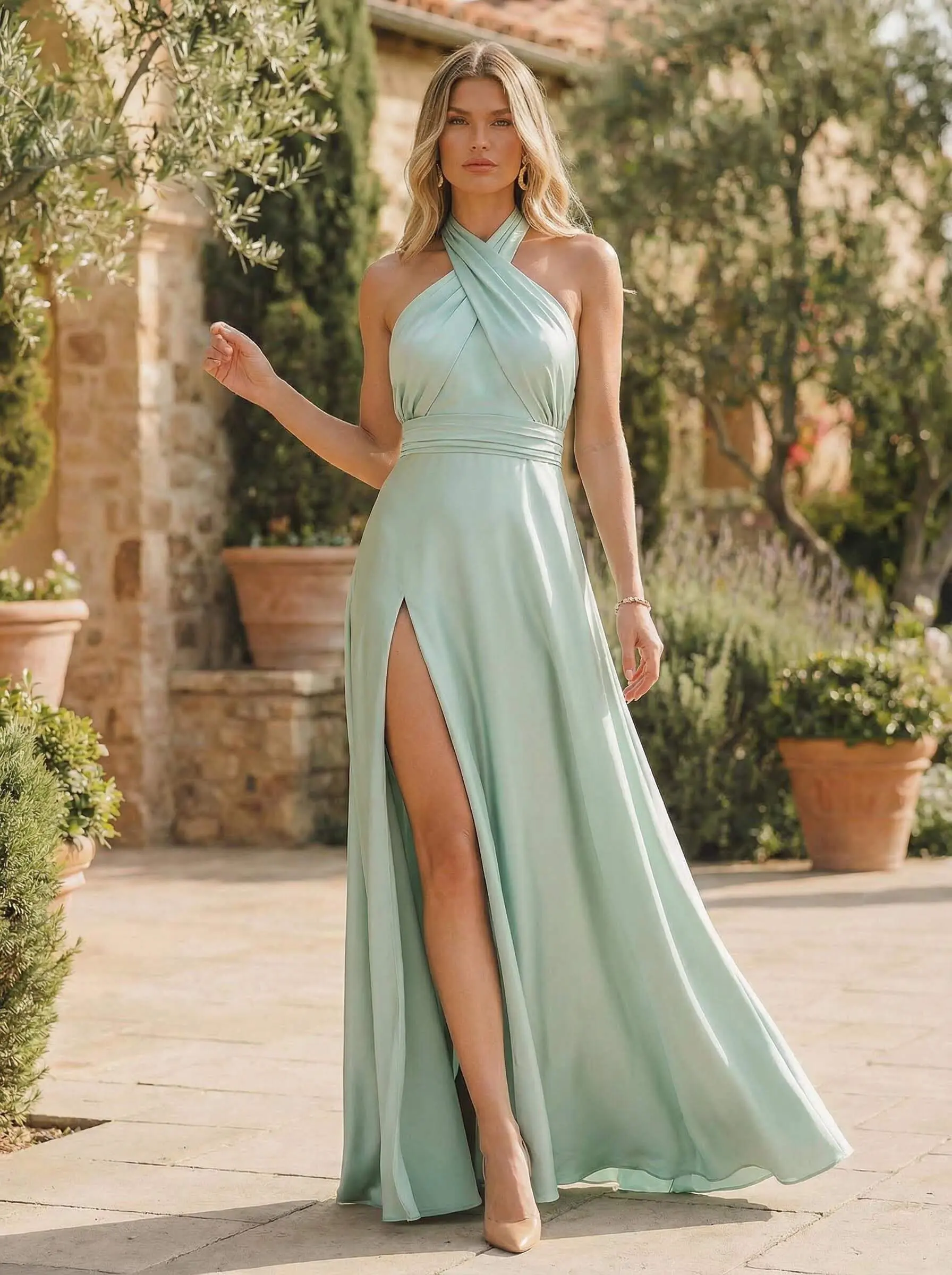
Clashing with the Venue and Season
The location and time of year are critical factors that should influence your dress choice. A dark velvet dress, while gorgeous, is an impractical and uncomfortable choice for a July wedding in a humid climate.
| Season | Recommended Fabrics | Styles to Avoid |
|---|---|---|
| Spring | Chiffon, Tulle, Crepe, Lace | Heavy velvets, thick wool blends, dark winter palettes. |
| Summer | Linen, Organza, Cotton Lace, Chiffon | Long sleeves, high necklines, heavy satins, non-breathable synthetics. |
| Autumn | Satin, Crepe, Mikado, Velvet | Light pastel colors, thin spaghetti straps (unless paired with a wrap). |
| Winter | Velvet, Heavy Satin, Mikado, Sequins | Short hemlines, backless designs, or sheer fabrics without proper outerwear. |
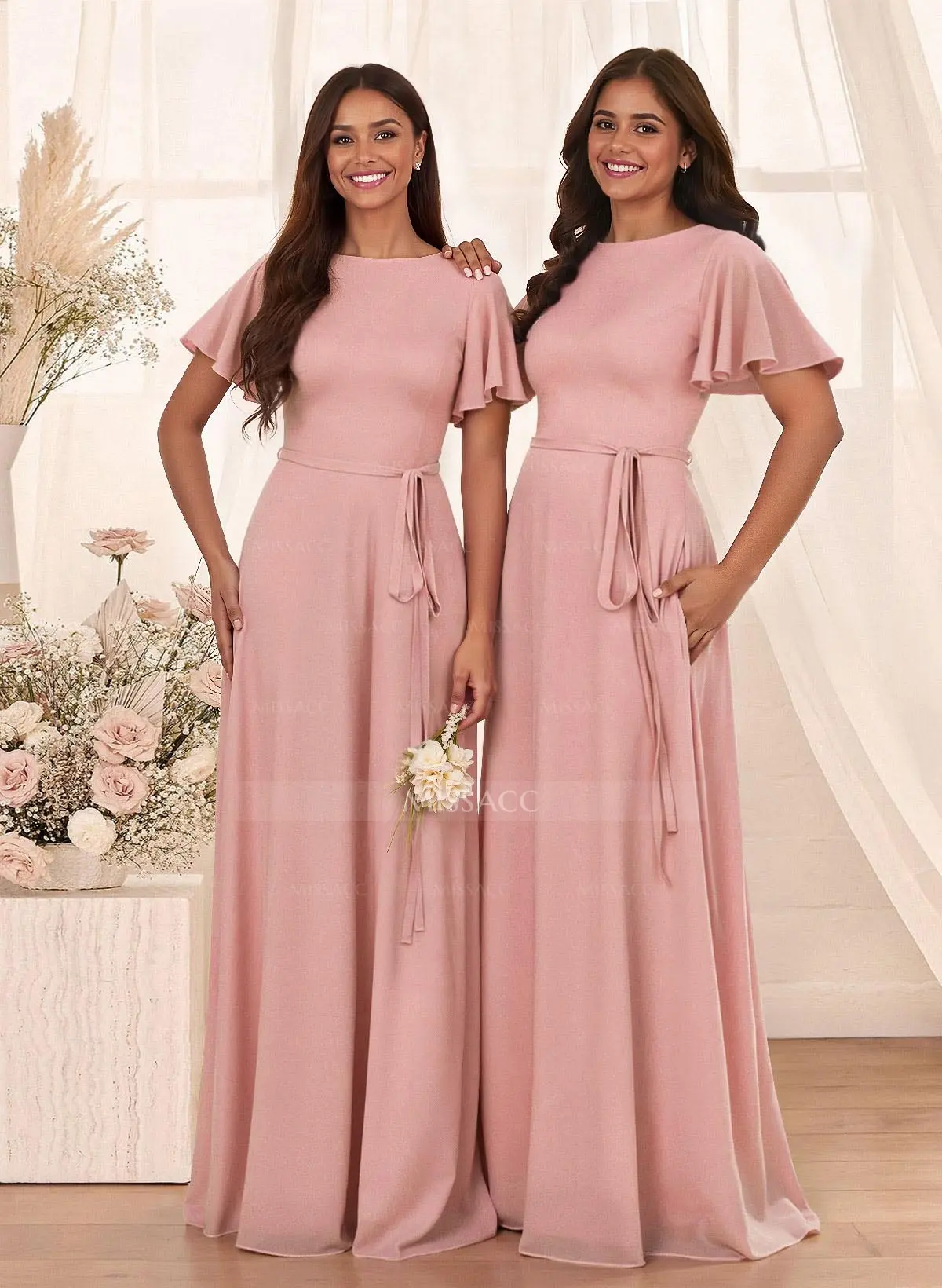
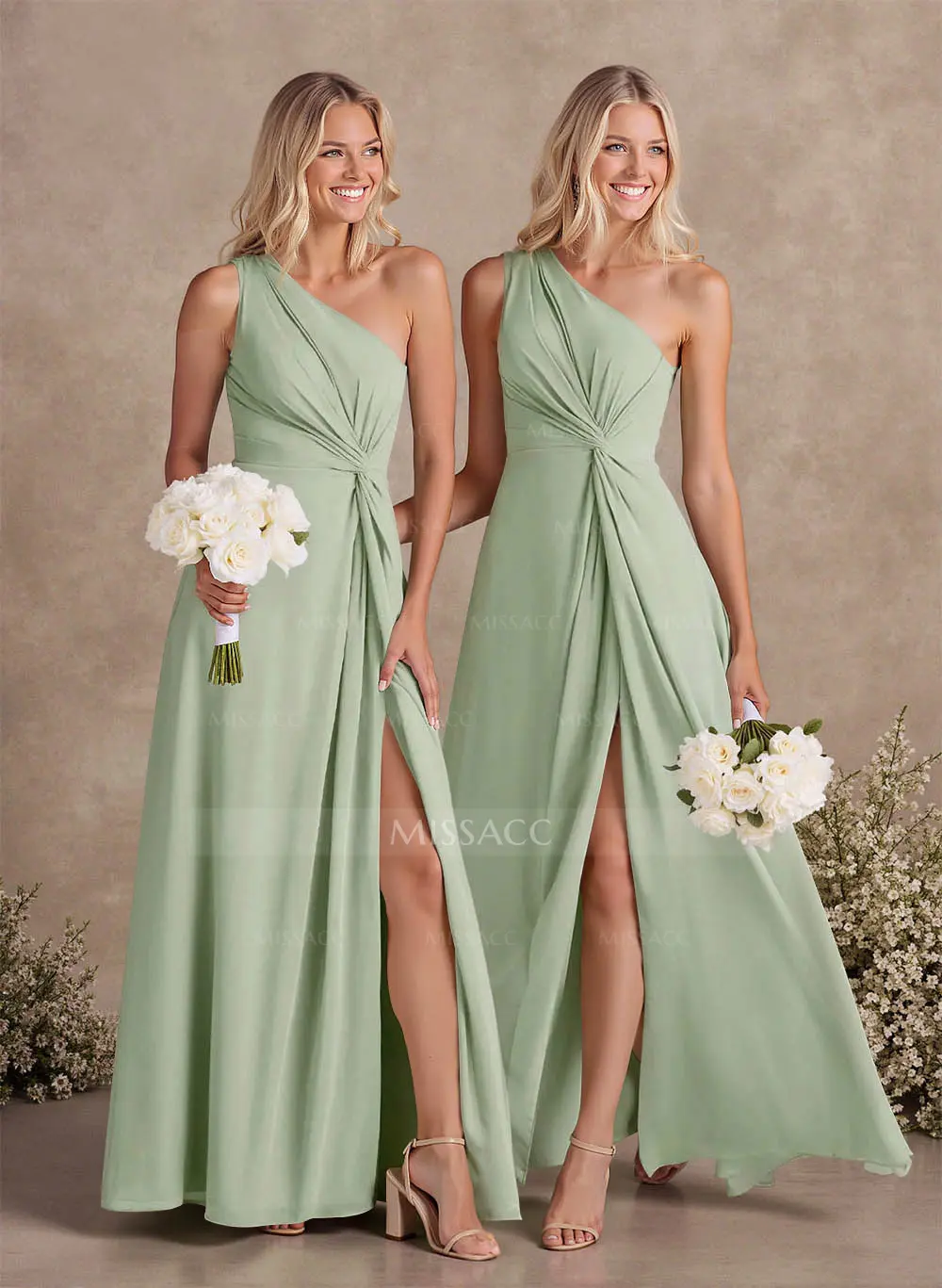
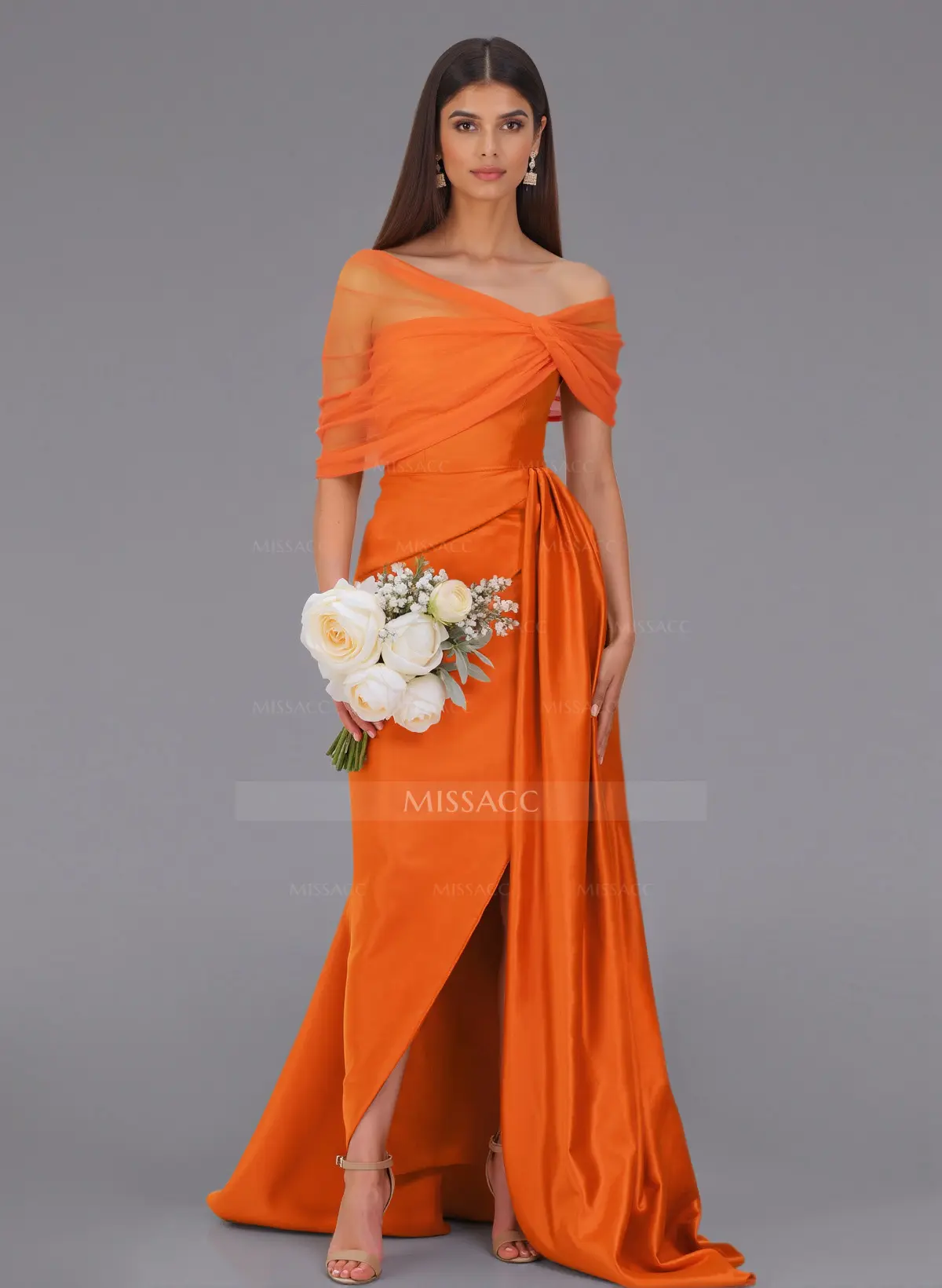
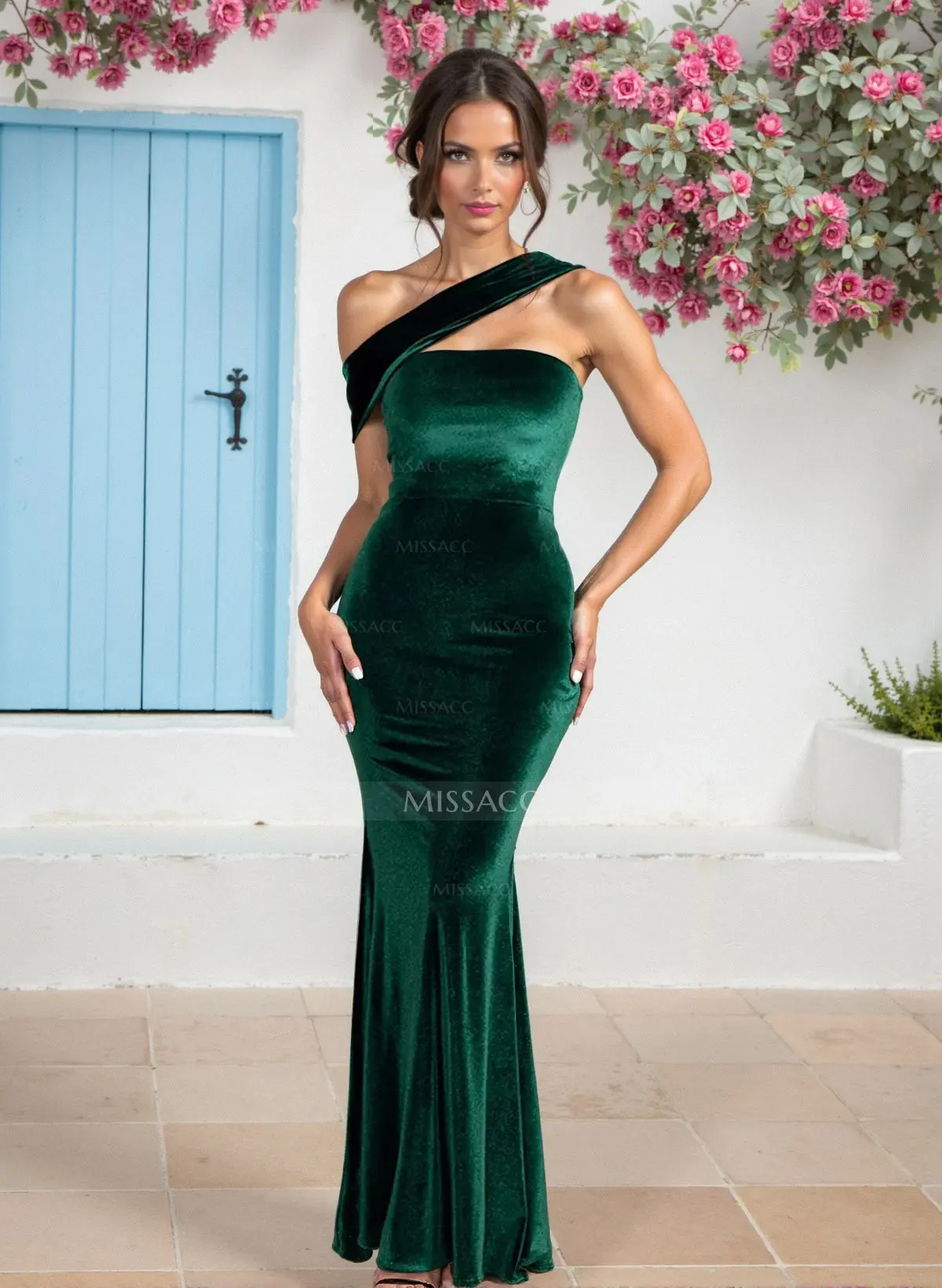
Remember, your bridesmaids will be in these dresses for hours, often moving between indoor and outdoor settings. Choosing a seasonally appropriate fabric ensures they stay comfortable from the first photo to the last dance.
2. Disregarding Different Body Types and Comfort
While the idea of a uniform bridal party is appealing, forcing everyone into a single, unforgiving silhouette is a recipe for discomfort. When your bridesmaids feel self-conscious, it shows in their posture, their smiles, and the overall wedding photos.
The “One-Style-Fits-All” Myth
Certain dress styles are notoriously difficult for a diverse group of women to wear.
- Sheath or Column Dresses: These dresses have a very straight, narrow cut that offers little room for curves. They can cling in unflattering ways and restrict movement, making them a challenging choice for many body types.
- Mermaid or Trumpet Gowns: While dramatic, these styles are extremely fitted through the hips and thighs before flaring out. They can be very restrictive and are often best suited for specific body shapes. An A-line or empire waist dress provides a more universally flattering alternative.
- Low-Back or Strapless Styles: These can present significant challenges with undergarments. If some of your bridesmaids require more bust support, a strapless design may cause stress and constant adjustments throughout the day.
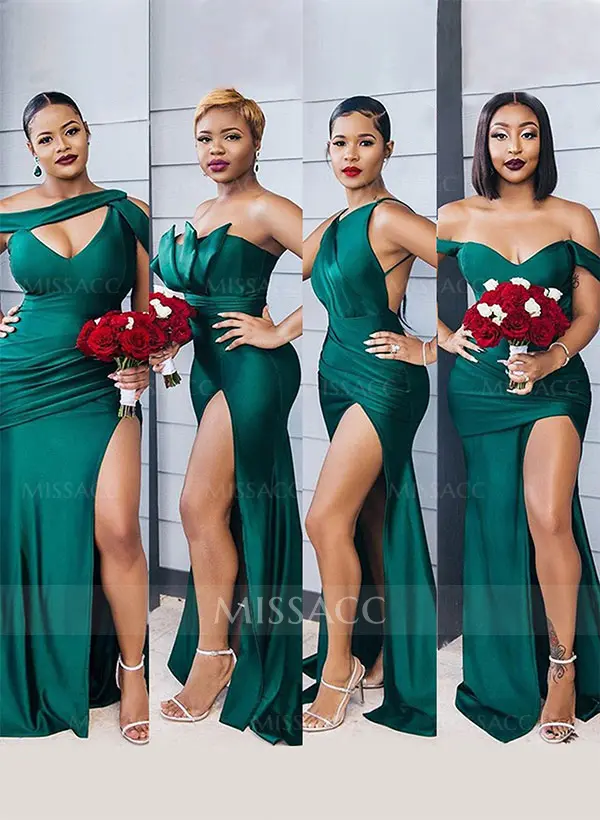
Convertible bridesmaid dresses offer a perfect solution, allowing each person to create a neckline and waistline that flatter their specific figure.
Forgetting the Importance of Fabric and Fit
Looks can be deceiving. A dress might appear beautiful on a hanger, but its fabric could be scratchy, stiff, or unforgiving.
- Avoid Stiff, Non-Stretch Fabrics: Materials with no give can be very uncomfortable for sitting, dancing, and even breathing over a long day. Look for high-quality fabrics that drape well and allow for easy movement.
- Consider the Lining: A dress made of a beautiful outer fabric can be ruined by a cheap, synthetic lining that doesn’t breathe. This is especially important for summer weddings, where a non-breathable lining can trap heat.
3. Choosing a Problematic Color Palette
Color is one of the most powerful tools for setting your wedding’s mood, but a poor choice can wash out skin tones or clash with your decor.
Unflattering Hues
A color that looks stunning on a Pinterest board may not translate well across a group of people with different skin tones and hair colors.
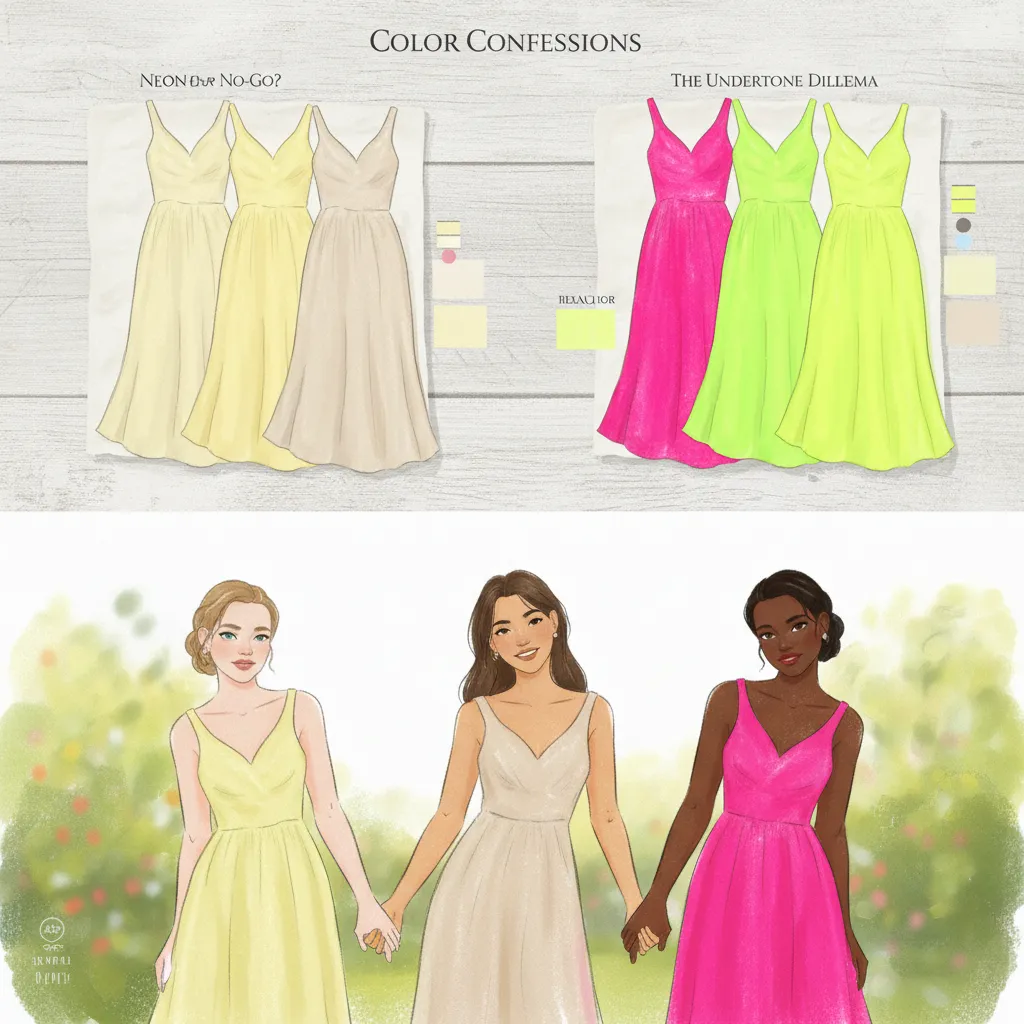
- Difficult Universal Colors: Certain shades of yellow, pale green, and beige can be very difficult to wear. They can make some skin tones look sallow or washed out.
- High-Intensity Neons: While fun for certain events, bright neon colors can be overwhelming in wedding photography and may clash with more romantic or classic floral arrangements. They can also date your photos quickly.
Choosing dresses from a single color family, such as shades of blue from navy to dusty blue, allows for a cohesive yet personalized look.
The Lighting Factor
The color you see in a brightly lit boutique will look different in other environments.
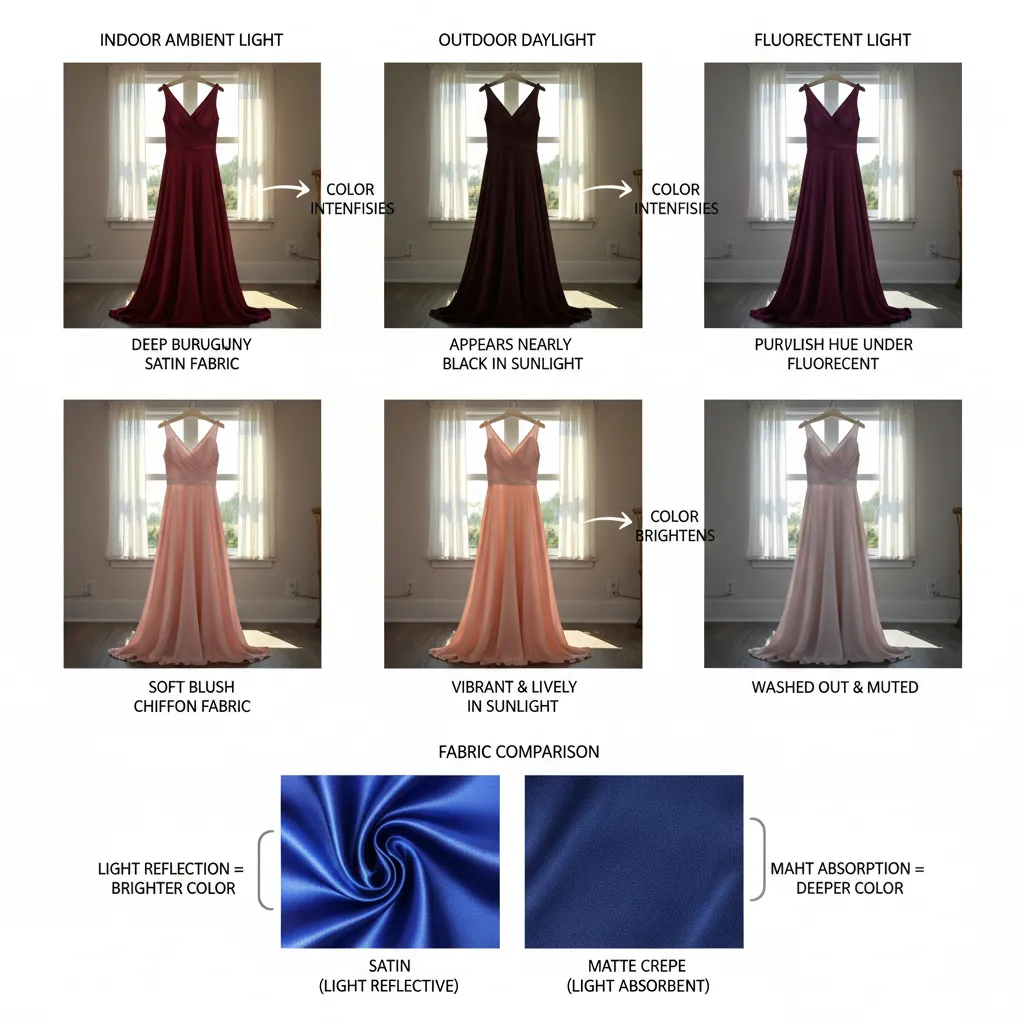
- Indoors vs. Outdoors: A deep burgundy might look rich and sophisticated indoors but can appear almost black in outdoor evening photos. A soft blush can look vibrant in the sun but may wash out under fluorescent reception lighting.
- Fabric and Sheen: The same color dye will look different on various fabrics. A satin finish will reflect light and appear brighter, while a matte crepe will absorb light and look deeper. Always view fabric swatches in different lighting conditions.
4. Prioritizing Trends Over Timeless Style
Trendy details can be exciting, but relying too heavily on them can make your wedding photos feel dated in just a few years.
- Over-the-Top Cut-Outs: While strategic cut-outs can be modern and chic, excessive or poorly placed ones can look less than elegant and create awkward lines.
- Exaggerated Sleeves or Ruffles: A dramatic puff sleeve is a statement, but if it overwhelms the dress and the person wearing it, the look becomes more about the trend than the bridesmaid.
- Fad-Driven Patterns: Bold, large-scale patterns can be distracting and may not age well. If you love prints, opt for a classic, subtle floral or a timeless texture.
A simple, well-constructed A-line dress in a solid color will always be in style, serving as a beautiful canvas for flowers and accessories. By focusing on classic silhouettes, you ensure your wedding aesthetic remains elegant for decades to come.
Frequently Asked Questions
Yes, absolutely. The mismatched trend is popular because it allows each bridesmaid to choose a style that best fits her body type and comfort level. To keep the look cohesive, you can unify the dresses with a single color, fabric, or length.
A-line and empire-waist silhouettes are widely considered the most universally flattering. The A-line shape cinches at the natural waist and flows outward, balancing proportions, while the empire waist is fitted just below the bust, creating a long, graceful line.
The length should primarily be determined by the formality of your wedding. Floor-length gowns are standard for formal, black-tie, and most evening weddings. Knee-length or midi dresses are excellent for semi-formal, cocktail, or daytime events.
Instead of a single shade, consider a palette of complementary colors, like an ombré of pinks or a range of jewel tones. Universal colors that tend to flatter a wide variety of skin tones include navy blue, dusty rose, burgundy, and emerald green.
Open communication is key. Listen to her concerns—they may be related to fit, comfort, or budget. If you’ve chosen a mismatched style, she has more freedom to find something she loves. If it’s a uniform dress, see if alterations could solve the issue.
A Timeless and Unified Vision
Your bridesmaids are an essential part of your wedding day, and their attire plays a significant role in your celebration’s overall visual story. By avoiding styles that clash with your theme, fit poorly, or prioritize fleeting trends over timeless elegance, you can create a beautiful and harmonious bridal party. Explore collections that offer a variety of silhouettes, fabrics, and colors to find the perfect combination that makes everyone look and feel their absolute best.